ABOUT SCALARWP
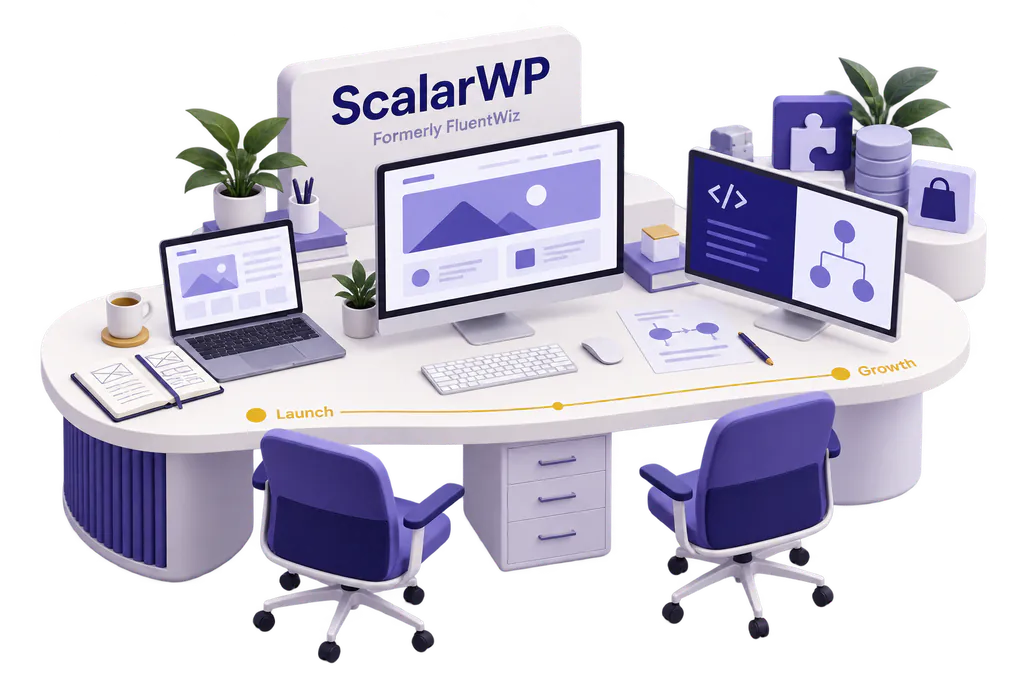
WordPress built around your business, from launch to what comes next.
We help businesses launch and grow with WordPress.
From websites and payments to custom features and integrations, we build around your needs.
WHY WE EXIST
Your business goals should guide your WordPress setup.
We help you turn those goals into a website and tools that support your everyday work.
For a new business, that may mean building a website and getting ready to accept the first payment. For an established team, it could mean improving checkout, automating customer follow-ups, or moving to a platform that better fits its needs.
Each stage brings decisions about what to use, what to build, and where to invest. We bring practical guidance and hands-on development to help you make those decisions and put them into action.
From your first launch to your next stage of growth, we help WordPress work for your business.
BUILT BY PEOPLE WHO BUILD
Close to the work. Honest about the answer.
ScalarWP is led by Nadim Haque and a team focused on WordPress engineering, integrations, and product development.
Before we recommend a build, we want to understand what you are trying to accomplish, how the business runs today, what systems you already use, and what is genuinely missing.
Sometimes that means a small extension. Sometimes it means a migration, a complex integration, or a new product. And sometimes, the right answer is that you do not need custom development at all.
We would rather solve the right problem than sell the biggest solution.
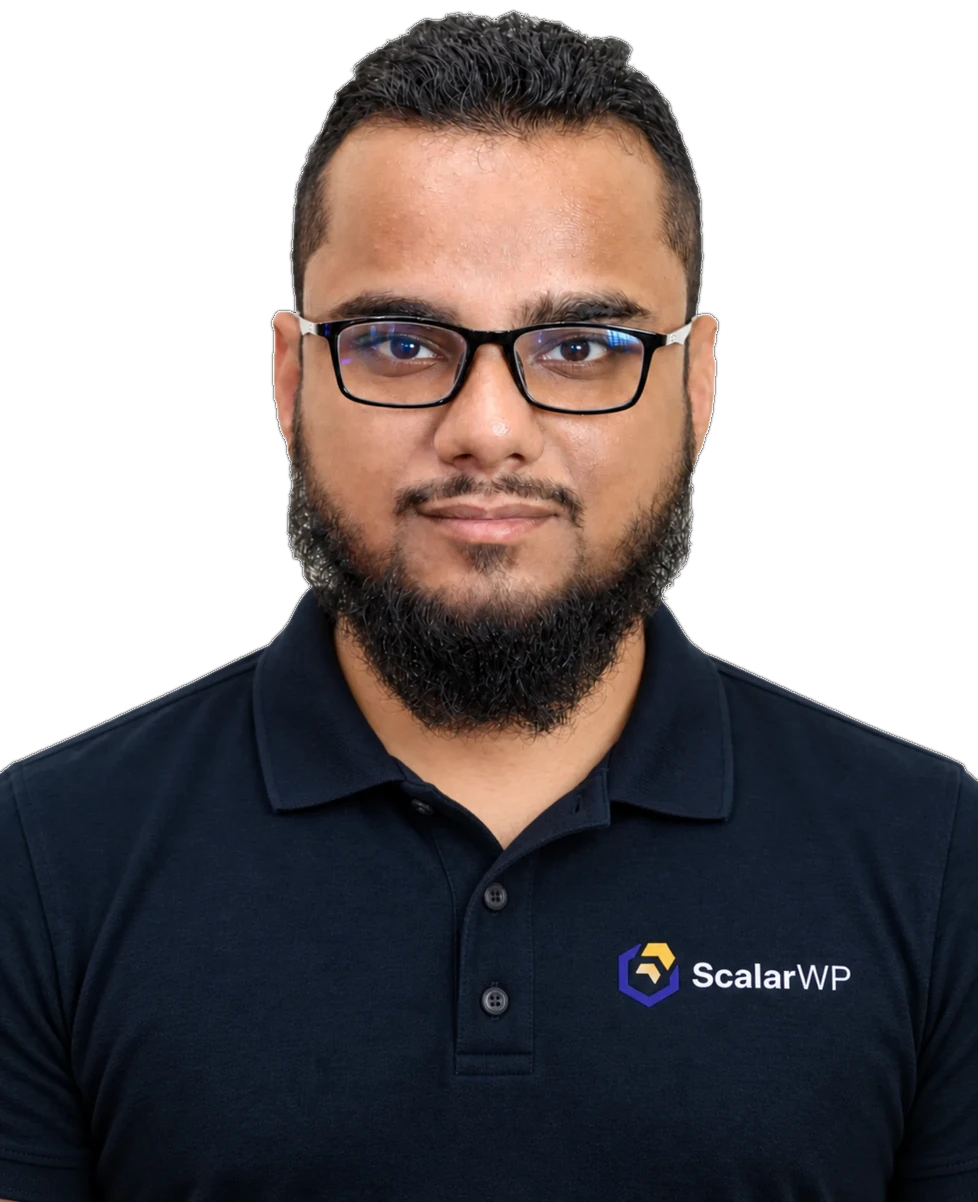
Nadim Haque — Founder, ScalarWP
OUR STORY
From small FluentWiz projects to a new chapter with ScalarWP
We started with small projects, learned from the people we helped, and took on bigger challenges along the way. What began as FluentWiz in 2021 inspired the idea for ScalarWP in 2026.
2021
Getting started with FluentWiz
Our first projects focused on helping people get more from Fluent plugins. We customized form styling, added validation with JavaScript, and built reporting screens inside WordPress.
Then came our first major project: a donation profile for Fluent Forms. Visitors could see how much each campaign had raised, who the top donors were, and donation totals by month and campaign. It opened the door to more ambitious work.
2022
Learning through support
Our founder’s background as a support engineer shaped how we worked. Resolving thousands of support queries had taught him to understand users’ goals, ask the right questions, and look beyond the first reported issue.
We brought that experience into projects for businesses using Fluent Forms, FluentCRM, and Fluent Support, helping them put more complex requirements into practice.
2023
Growing alongside our clients
Businesses were using Fluent Forms, FluentCRM, Fluent Support, and FluentBooking together, and asking for features tailored to their daily work. We grew the team and built a deeper understanding of how these tools could work together.
Projects such as integrating a subscription plugin with FluentCRM and WooCommerce introduced us to more work across plugins, while Fluent remained our main focus.
2024
Finding an idea worth exploring
A client wanted Fluent Forms uploads sent directly to Dropbox instead of the WordPress media library. While building it, we saw how a similar solution could help other businesses organize their files.
We began experimenting with Fluent Forms and cloud storage services alongside our custom projects. Those experiments became the foundation for our first product.
2025
Launching our first product
After six months of research and development, we launched Cloud Storage Manager for Fluent Forms. The community’s encouragement and feedback helped us improve the product and explore what to build next.
We also delivered several major client projects using a wider range of WordPress plugins. Each project expanded our experience in customization, integration, and business workflows.
2026
The idea for ScalarWP
Our work was reaching beyond the Fluent ecosystem. Clients needed help with website setup, e-commerce customization, integrations, migrations, and technical decisions across WordPress.
That broader direction sparked the idea for ScalarWP. It gave us a name for the next chapter, built on the team, experience, and client relationships developed through FluentWiz.
Today
What comes next
We’re continuing to develop our own products and help businesses get started, improve their operations, and grow with WordPress. Client conversations still guide our work, giving us new ideas and practical problems worth solving.
“If you need a technical partner who dives deep into complex integrations and thinks strategically alongside you, I highly recommend Nadim and FluentWiz.”
WHAT WE BELIEVE
Practical WordPress work starts with the right decision.
Plugins are a starting line.
Use off-the-shelf tools when they work. Custom WordPress work should reduce manual work, connect systems, or add logic your stack cannot.
Structure first, then scale.
Most WordPress stacks do not need more plugins. They need a decision about where data lives, how systems connect, and what happens when something fails.
You should own the outcome.
Your code in your repository, your accounts in your name, documentation the next developer can read. The goal is not to make you dependent on us.
Build for the cost that comes later.
A workaround can look cheap until plugin conflicts, manual fixes, and update-breaking patches arrive. We build for the business you will be running two years from now.
HOW WE WORK
We begin with the workflow—not the code.
Review your WordPress stack
We look at your setup, plugins, data, and goal to find what is actually blocking you.
Map the workflow
We trace the manual steps, duplicate data, and edge cases that usually get missed in a quick fix.
Scope the build
You receive a written scope, proposal, and delivery plan. You know what will change, what will stay, and how the important exceptions will be handled.
Build, test, and hand off
We build plugin-native where possible, test against real failure paths, and provide documentation and a walkthrough when the work is complete.
Tell us where your stack stops.
Send the workflow, the plugins involved, and the outcome you need. We will review the technical path and help you decide what should stay off-the-shelf, what needs custom work, and what to build first.